









Pre-Roll Packaging Tubes & Multi-Packs
Posted by Cones Canada on Jul 14th 2026
The pre-roll packaging category continues to grow and more companies are innovating, with a wide range of material options including plastic, glass, paper, recycled materials and metal, with formats designed for individual pre-rolls and multi-packs of nearly every size.
Packaging plays a massively important role throughout the lifecycle of a pre-roll. It not only needs to fit the finished product properly but also help prevent bending or crushing during handling and distribution, and protect the pre-roll on a retail shelves. The material, package size and closure can also affect how well the pre-roll is protected from air and moisture.
Plus, it needs to carry all the important information about the product, from your branding and messaging to required legal warnings and data points, as well as child-proofing and any other compliance-related concerns and needs.
For brands, packaging is also tied directly to the type of product being sold. A single, value-focused pre-roll may be best suited for a simple plastic doob tube, while an infused pre-roll or premium blunt may call for premium glass packaging.
Pre-roll multi-packs have an even wider range of formats, including paper boxes, plastic cases, wide-mouth tubes, glass jars and metal tins, all providing different levels of protection, presentation and premiumization.
And while child-resistance, tamper-evidence, warning labels and the plainness of the packaging are controlled by Health Canada regulations, there are also packaging requirements to consider on a province-by-province basis, as well.
All of this makes it important to select packaging based on the actual pre-roll, production process and intended market, rather than choosing a pre-roll container based on appearance alone.
While Cones Canada does not currently sell pre-roll packaging directly, packaging is available through our North American parent company, Custom Cones USA, which supplies unbranded and custom pre-roll packaging for individual pre-rolls and multi-packs.
Pre-Roll Packaging Tubes
Pre-roll tubes remain one of the most common packaging formats in the industry and are available for everything from small, individual dogwalker pre-rolls to wide, multi-pack configurations.
The basic tube format is popular because it is easy to integrate into production and is an efficient container for pre-roll joints and blunts. Pre-rolls can be loaded directly into the container, closed and labelled without the need for complex inserts or assembly. Tubes are also easy to pack into cases, transport and display on retail shelves, making them practical for both small operations and larger pre-roll production lines.
However, not all pre-roll tubes perform or look the same. Plastic pop-top tubes are the most familiar option, while capped plastic tubes, Super Seal packaging and glass tubes provide different closures, levels of protection against moisture and consumer experience. Paper, recycled plastic and compostable materials have also expanded the number of tube options available for environmentally friendly brands.
The finished pre-roll should ultimately determine the size and style of tube or pack. Length, diameter, shape and filter size can all affect the final fit, and brands producing blunts, infused pre-rolls or multi-packs may need wider packaging than that of a standard pre-roll. And the closure is equally important as it can affect child resistance, tamper evidence and how well the package limits exposure to air and moisture for keeping pre-rolls fresh.
So let's explore the main types of pre-roll packaging tubes and multi-packs available today.
Health Canada Packaging Regulations
Before we get into the available packaging for your pre-rolls, let's take a minute and review the Health Canada packaging regulations.
According to the regulations, pre-roll packaging must
- Be child-resistant;
- Include a tamper-evident feature;
- Protect the product from contamination;
- Keep the pre-rolls dry;
- Be made from materials suitable for cannabis products; and
- Contain only one class of cannabis (for example, dried cannabis only—not mixed with edibles or extracts).
There are also restrictions and regulations for the labeling. For example, while brand name and logo are allowed, the following my not be part of your cannabis packaging, including pre-rolls, per Health Canada:
- Lifestyle imagery;
- Cartoon characters;
- Metallic or holographic decoration intended to attract attention;
- Embossing or unusual textures for promotional effect;
- Claims appealing to youth;
- Celebrity endorsements;
- Health claims; or
- Descriptions that could encourage overconsumption.
Meanwhile, the following information MUST be included on the label of your pre-roll packaging, again, per Health Canada:
- Brand name;
- Product name;
- Standardized cannabis symbol;
- THC/CBD content;
- Net weight;
- Class of cannabis ("Dried Cannabis");
- Health warning message;
- Excise stamp;
- Lot number;
- Packaging date;
- Recommended storage conditions (when applicable);
- Licence holder's name;
- Telephone number;
- Email address;
- Barcode (optional but commonly used); and
- Any required bilingual information (English and French).
However, one place where Health Canada has loosened their regulations in on see-through packaging. Where opacity was required for years, Health Canada in 2025 began allowing transparency in packaging to allow consumers to see the product, though there are restrictions.
There may also be province-specific pre-roll packaging regulations that need to be met before heading to store shelves, so always check any local rules before buying in bulk.
And remember, it is up to the LP to meet any packaging standards, so due diligence is your friend.
Plastic Pop-Top Tubes
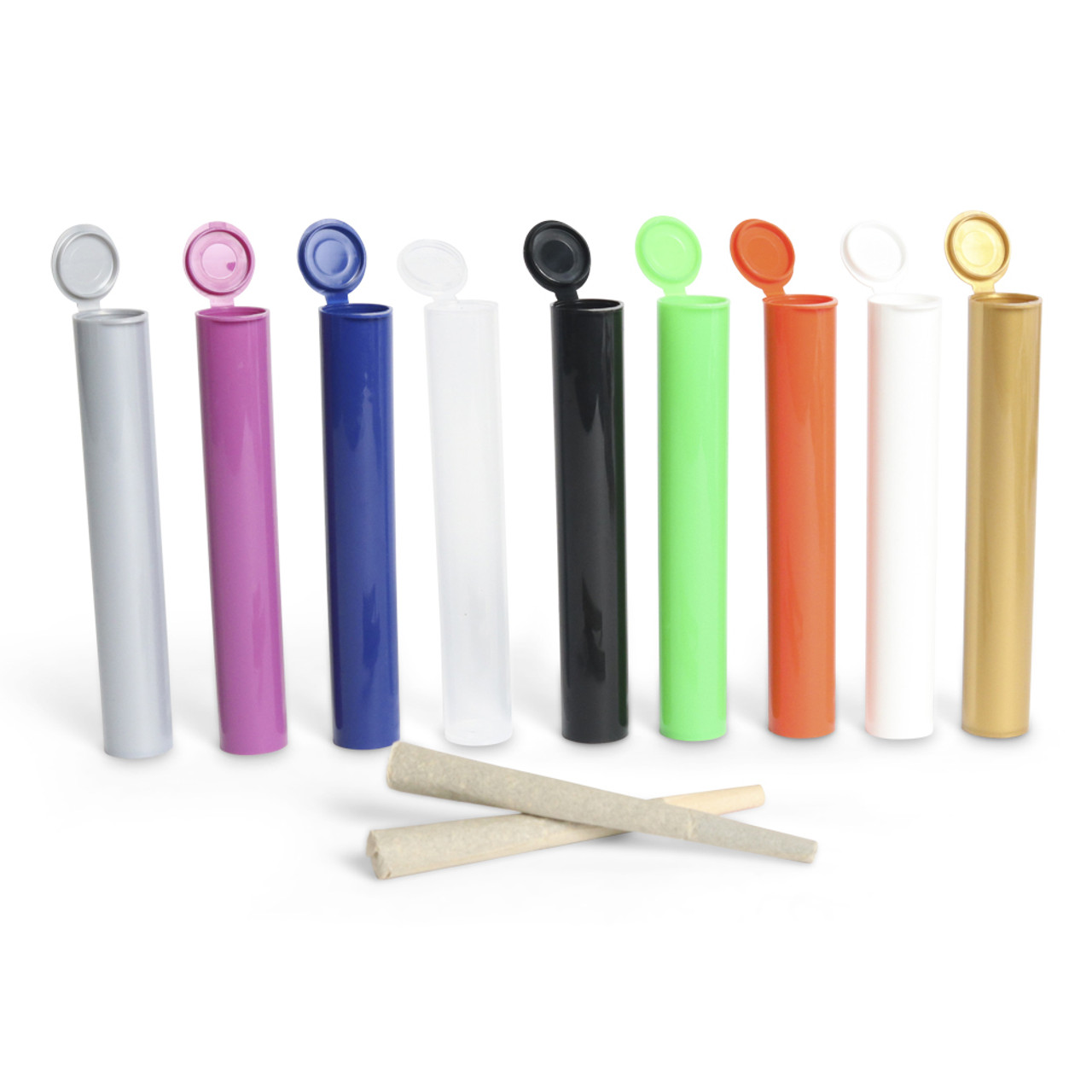
Plastic pop-top tubes, often referred to as pre-roll doob tubes, are the standard starting point for pre-roll packaging.
The squeeze-and-pop closure is easy for adults to use and is available in certified child-resistant formats. They're also lightweight, durable and relatively inexpensive, which makes them practical for high-volume pre-roll production focused on value and minimizing packaging costs.
Size is one of the main considerations. Shorter tubes can hold 70mm mini or 84mm half-gram pre-rolls, while longer tubes are designed for 98mm and 109mm cones, while wide and extra-wide options can fit larger pre-rolls or multiple pre-rolls in one package.
Pop-top tubes are available in black, white, clear and a wide range of colours, plus custom labels and tamper evident shrink sleeves can be added for branding and product information, as well as compliance.
Plastic Tubes with Child-Resistant Caps
Plastic tubes are also available with separate push-and-turn caps.
These tubes have a look similar to some glass packaging but use lightweight plastic construction for better economics. Different cap colours and finishes can be paired with compatible tubes, including smooth, ridged, wood grain and metallic options.
Super Seal Pre-Roll Tubes
Super Seal tubes are designed around a tighter closure and child resistance.
This format combines child resistance, tamper evidence and an airtight seal all in one packaging tube. When the cap is applied, the package creates a tamper-evident band that shows whether the container has already been opened.
Super Seal tubes come in standard cylindrical shapes as well as rounded and tapered options. Tapered tubes follow the general shape of a cone and reduce open space around the pre-roll. And because they are resealable, some Super Seal tubes and mini jars can also be used for smaller pre-roll multi-packs.

Glass Pre-Roll Tubes
Glass tube packaging is commonly used for premium pre-rolls, infused products and pre-rolled blunts.
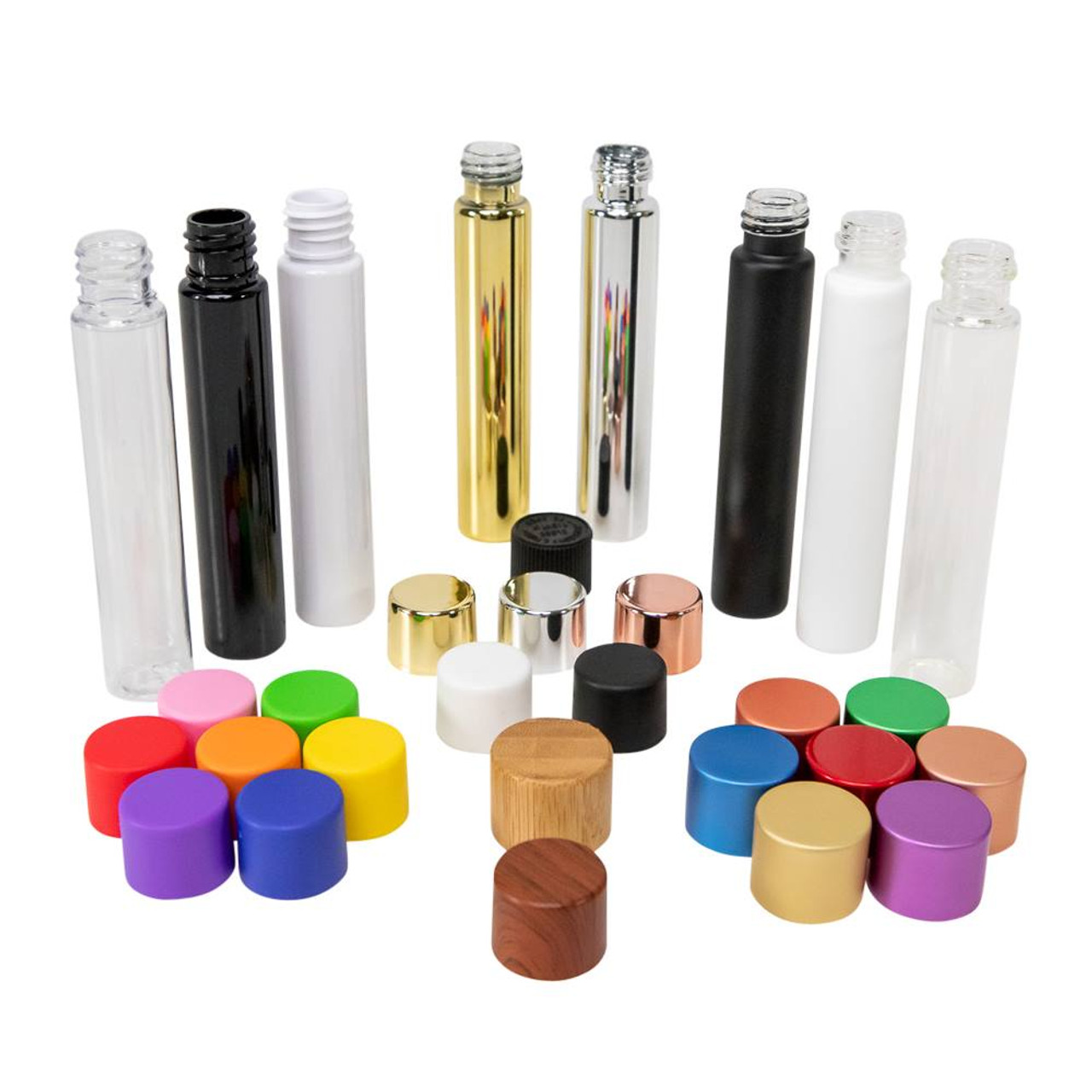
Clear glass displays the product where transparent packaging is permitted, which is valuable for pre-rolls featuring custom branding, premium filter tips or visible infusion coatings. Glass tubes are also available in matte black, matte white, gold, silver and other finishes.
Compared to many plastic materials, glass provides a stronger barrier against air and moisture, and the closure matters, so the performance of the cap needs to be considered when pairing with a glass tube.
Many glass tubes can be paired with child-resistant push-and-turn caps and are available in different colours, finishes and styles, including metallic and wood-look options.
Aluminum Tube Caps
Glass tubes can also use specialty closures.
Cork-top tubes are common for premium pre-rolls and blunts. Traditional tapered corks and T-shaped corks provide a natural, appealing appearance, while champagne-style corks create a tighter closure and produce a pop sound when removed.
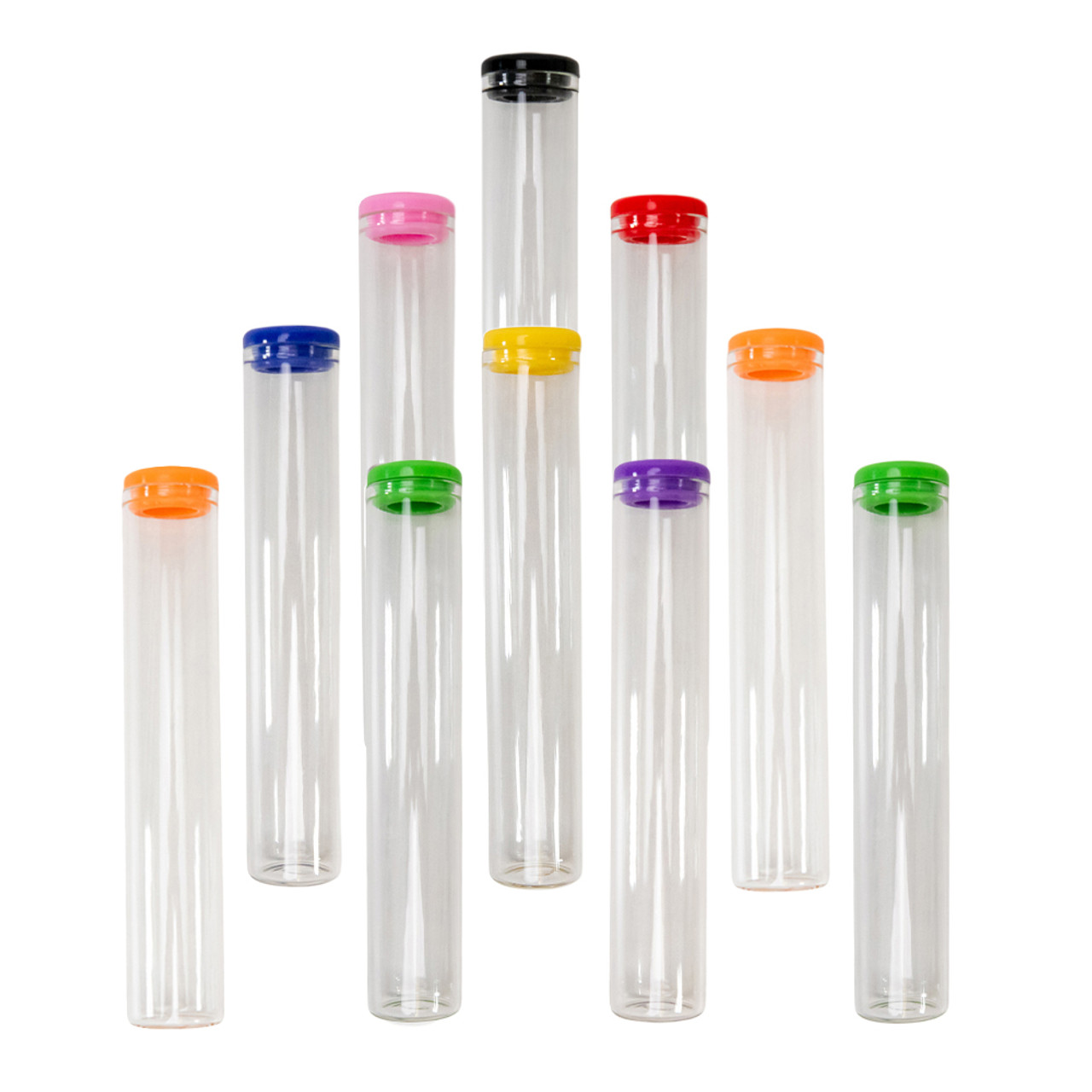
Silicone caps add colour and are available in multiple sizes for compatible glass tubes, while aluminum screw caps offer a clean metallic finish in black, silver or gold.
Many cork, silicone and aluminum closures are not child resistant however, which is required by Health Canada regulations, so be sure you are choosing CR pre-roll packaging before you commit.
Paper Pre-Roll Tubes
Environmentally friendly paper tubes keep the familiar tube shape while replacing the plastic body with paper-based material. They can be used for individual pre-rolls or multi-packs and can be custom printed or labelled, and some formats use a separate slide-and-pop child-resistant cap.
Paper tubes reduce conventional plastic doob tubes while keeping a cylindrical design. However, paper does not naturally provide the same moisture and oxygen barrier as glass or plastics.
Eco-Friendly Pre-Roll Tubes
Several eco-friendly tube materials are available for brands looking to reduce their use of new plastic packaging.
Reclaimed ocean-bound plastic tubes use material recovered from waterways before it reaches the ocean. Post-consumer recycled plastic tubes use recovered material that has already gone through a previous consumer use.
Compostable pop-top tubes are another option. Certain formats use blends of plant-based carbohydrates, glycerin and polymers to provide the familiar pop-top design in a material intended for composting in a backyard compost pile.
Paper and glass tubes also support sustainability goals because of their material composition and recyclability. Recycled, recyclable, biodegradable and compostable do not mean the same thing, so packaging claims should match the material.
But as always, the key is in choosing a child-resistant cap and adding a tamper-evident band, so be sure to explore all of the cap options available to find the right one for your brand.
Pre-Roll Multi-Pack Packaging
As pre-roll brands expand beyond individual joints due to growing popularity and demand, multi-pack packaging provides a much wider range of formats.
Unlike a single tube, multi-pack packaging needs to account for several pre-rolls moving and being stored in the same container. The package may need to separate individual pre-rolls to prevent them from shifting or being crushed and remain easy for the consumer to open and close after the first use.
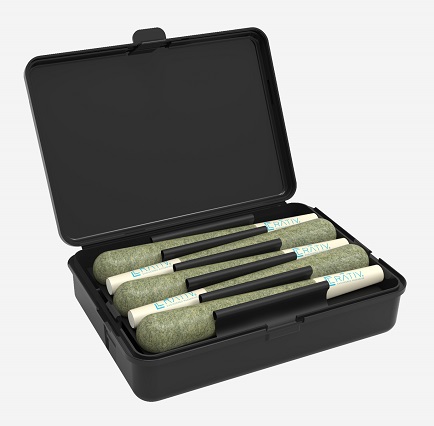
Pack count and pre-roll size are the first considerations to make as five king-size pre-rolls require a very different package than 10 mini dogwalker pre-rolls, even when the total amount of flower used is comparable. Some multi-packs use dividers or fitted inserts to hold each pre-roll in place, while wide tubes and jars allow several pre-rolls to sit together in one container side-by-side.
Materials also change the overall packaging experience. Paper boxes offer several opening styles and interior layouts, glass jars and tubes are commonly used for premium packs. Plastic provides durable and cost-conscious options ranging from wide pop-top tubes to flip-top cases, while metal tins create a rigid package that protect joints and blunts.
Because there are so many formats, the clearest way to compare pre-roll multi-pack packaging is by primary material.
Paper Pre-Roll Multi-Packs
Paper packaging has a wide selection of multi-pack formats.
Cigarette-Style Boxes
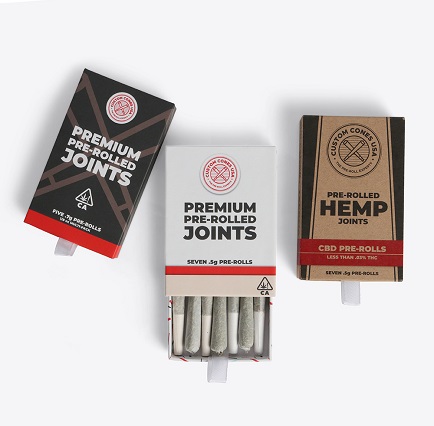
Cigarette boxes are a familiar option for rows of pre-rolls, with common configurations including five, seven, 10 and 20 pre-rolls, but custom boxes can be sized around the exact cone length, diameter and pack count. Paperboard inserts can be incorporated to separate the pre-rolls and keep them organized for a more polished presentation.
The exterior can be custom printed in full colour, with options like foil, embossing, spot UV and custom die-cuts. And since paper cigarette boxes are not naturally airtight, overwrapping or shrink wrapping may be added to ensure product freshness, with overwrapping providing the stronger barrier.
Push Packs
Push Packs use an outer paper box and a sliding inner tray where the consumer presses the opening tab while sliding the tray out. Child-resistant Push Pack formats are available, making them a common paper-based option for staying compliant in regulated pre-roll markets.
And again, dividers can be incorporated separate each pre-roll, or the tray can be left open to increase capacity, and the inside and outside of the push pack can also be printed with custom branding.
Pull Packs
Pull Packs use a similar box-and-tray structure to Push Packs but open with a non-CR satin ribbon. The thick paperboard construction gives the package a rigid feel and premium presentation. Internal dividers can hold individual pre-rolls, while additional inserts can create a separate slot for matches, hemp wick or another accessory to bolster the SKU.
Standard Pull Packs are not child resistant, but custom configurations can be added to incorporate child-resistant features.
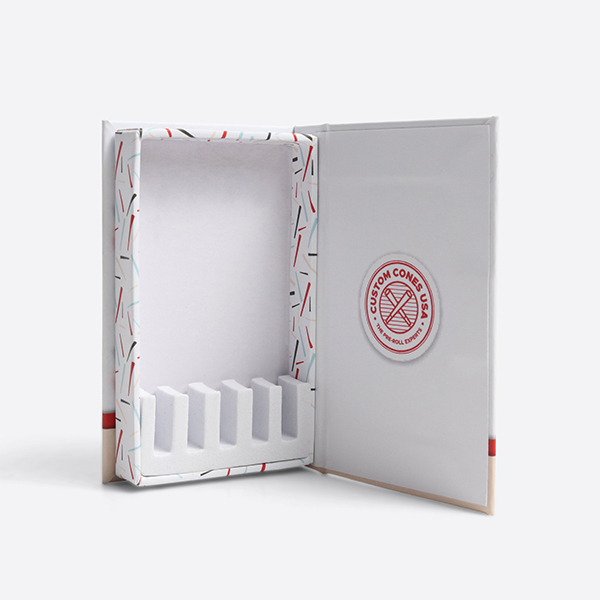
Book Boxes
Book Boxes, as you might imagine, open from the side like a book cover.
They are often used for premium multi-packs, mixed-strain packs and specialized formats like a pre-roll cross joint. Paperboard inserts can hold each pre-roll in place and can be printed to identify different strains or branding.
Book Boxes can be produced in vertical or horizontal layouts and sized around the number of pre-rolls being packed and are not child resistant.

Glass Pre-Roll Multi-Packs
Glass multi-packs normally use wide tubes or mini jars to hold multi-counts pre-roll SKUs. Clear glass allows the pre-rolls to remain visible where permitted, while opaque and coloured glass provide a unique look when visibility is not important or permitted.
The weight and rigidity of glass make it a common premium option and provides a strong barrier against air and moisture, although the cap style ultimately determines how well the package seals. Child-resistant caps are available for certain glass jars and wide tubes, while cork and other specialty closures do not provide child resistance, so be sure to check with your sales rep or manufacturer when buying.
Eco-Friendly Pre-Roll Multi-Packs
Eco-friendly multi-packs cover several material types and formats, including paper cigarette boxes, Push Packs, Pull Packs, Book Boxes and Button Boxes, and kraft paper are also available with certain custom formats.
Reclaimed ocean-bound plastic and post-consumer recycled plastic replace some or all virgin plastic with recovered material, while compostable materials provide a minimal-waste option.
Glass and tins are recyclable and are also more likely to be reused than a standard disposable tube, but ultimately the decision depends on the goal.
Freshness and Packaging Requirements
Pre-Roll packaging should not only protect pre-rolls from bending or crushing, they also limit unnecessary exposure to air and moisture. In fact, it's the law in Canada.
Glass provides a strong material barrier, but ultimately the closure determines how effectively the package is sealed. Super Seal tubes are designed around a tighter cap system, while paper multi-packs may use overwrapping for additional barrier protection.
Humidity-control packs can also be used in certain multi-pack formats, and the humidity level should match the amount of cannabis pre-rolls being stored inside.
Child resistance, tamper evidence, opacity and labelling requirements vary by market, so packaging should always be reviewed against the regulations that apply where the product will be sold.
Choosing the Right Pre-Roll Packaging
Start with the finished pre-roll size and the number of pre-rolls in each package. A single 109mm pre-roll may fit a standard sized tube, while five 84mm pre-rolls may work better in a cigarette box, Push Pack or Snap Pack.
Material is the next decision. Plastic is durable and economical while glass provides a premium option and strong barrier. Paper offers the widest range of formats, while recycled and compostable materials support goals of sustainability. And tins provide rigid, reusable multi-pack packaging and a premium experience.
The package also needs to work in production, including filling, labelling, closing and case packing.
But whatever you choose, remember to check your packaging with Health Canada regulations. Producers have a lot of leeway – more than they used to, in fact – but there are still several restrictions that have to be met and no specific list of approved packaging.
Pre-roll tubes, multi-packs and custom packaging are available through our North American parent company, Custom Cones USA.
Freshness and Packaging Requirements
Pre-Roll packaging should not only protect pre-rolls from bending or crushing, they also limit unnecessary exposure to air and moisture. In fact, it's the law in Canada.
Glass provides a strong material barrier, but ultimately the closure determines how effectively the package is sealed. Super Seal tubes are designed around a tighter cap system, while paper multi-packs may use overwrapping for additional barrier protection.
Humidity-control packs can also be used in certain multi-pack formats, and the humidity level should match the amount of cannabis pre-rolls being stored inside.
Child resistance, tamper evidence, opacity and labelling requirements vary by market, so packaging should always be reviewed against the regulations that apply where the product will be sold.
Choosing the Right Pre-Roll Packaging
Start with the finished pre-roll size and the number of pre-rolls in each package. A single 109mm pre-roll may fit a standard sized tube, while five 84mm pre-rolls may work better in a cigarette box, Push Pack or Snap Pack.
Material is the next decision. Plastic is durable and economical while glass provides a premium option and strong barrier. Paper offers the widest range of formats, while recycled and compostable materials support goals of sustainability. And tins provide rigid, reusable multi-pack packaging and a premium experience.
The package also needs to work in production, including filling, labelling, closing and case packing.
But whatever you choose, remember to check your packaging with Health Canada regulations. Producers have a lot of leeway – more than they used to, in fact – but there are still several restrictions that have to be met and no specific list of approved packaging.
Pre-roll tubes, multi-packs and custom packaging are available through our North American parent company, Custom Cones USA.
Whether packaging a single pre-roll or many, we explore the main types of pre-roll packaging tubes and multi-packs available today.